In short
- Weigh your coffee and water. Scoops are a guess.
- A common start is about 1 part coffee to 16 parts water for filter, and 1 to 2 for espresso.
- Look for a timer, a quick response and a surface that is easy to wipe.
- A refractometer is an optional next step for measuring the result.
Why weigh your coffee
Scooping coffee by the spoon is a guess. Beans differ in size and density, so one scoop of a light roast can weigh quite differently from one scoop of a dark roast. Weighing your coffee and your water takes the guesswork out and makes your results repeatable.
Start with a ratio
Brewing is mostly a question of ratio: how much water you use for how much coffee. A common starting point for filter coffee is about 1 part coffee to 16 parts water. For espresso the ratio is much tighter, often close to 1 part coffee to 2 parts liquid in the cup.
| Filter | Espresso | |
|---|---|---|
| Ratio | 1 : 16 | 1 : 2 |
| Example | 15 g coffee, 240 g water | 18 g in, 36 g out |
These are starting points, not rules. Adjust them to your taste.
What to look for in a scale
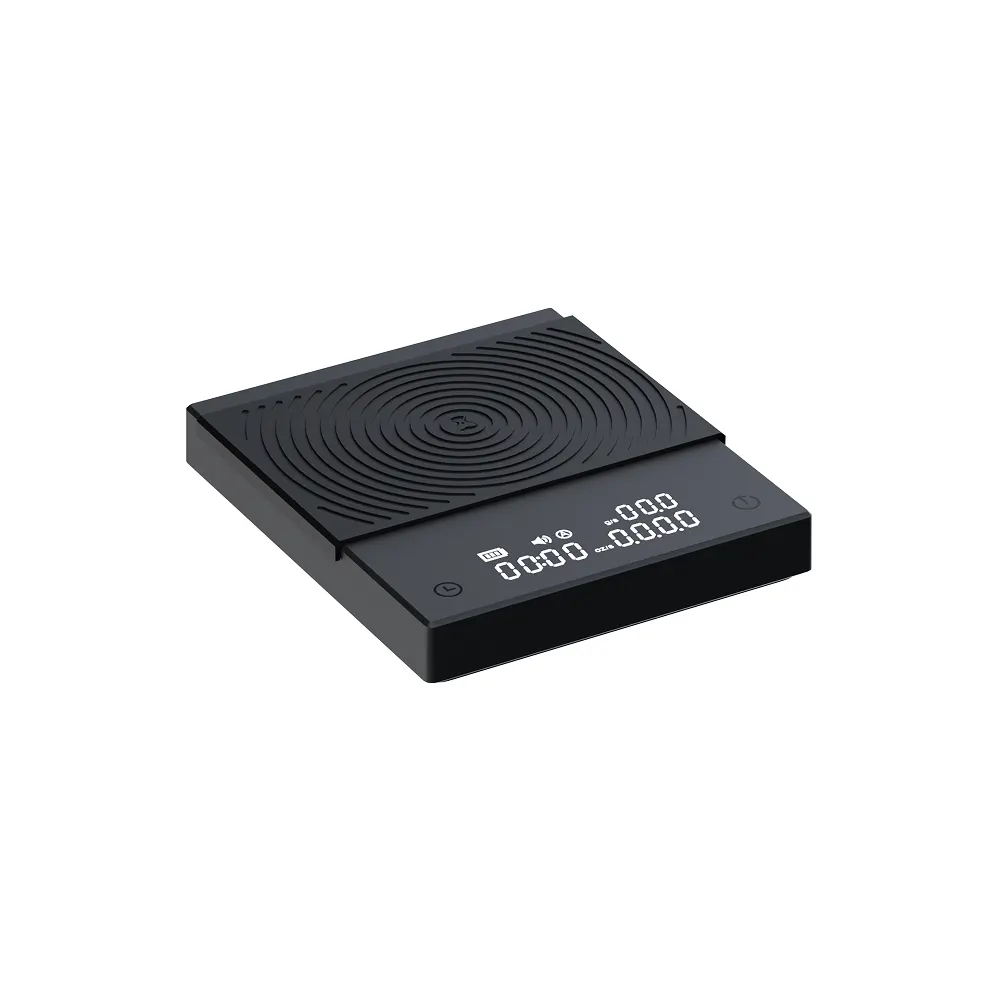
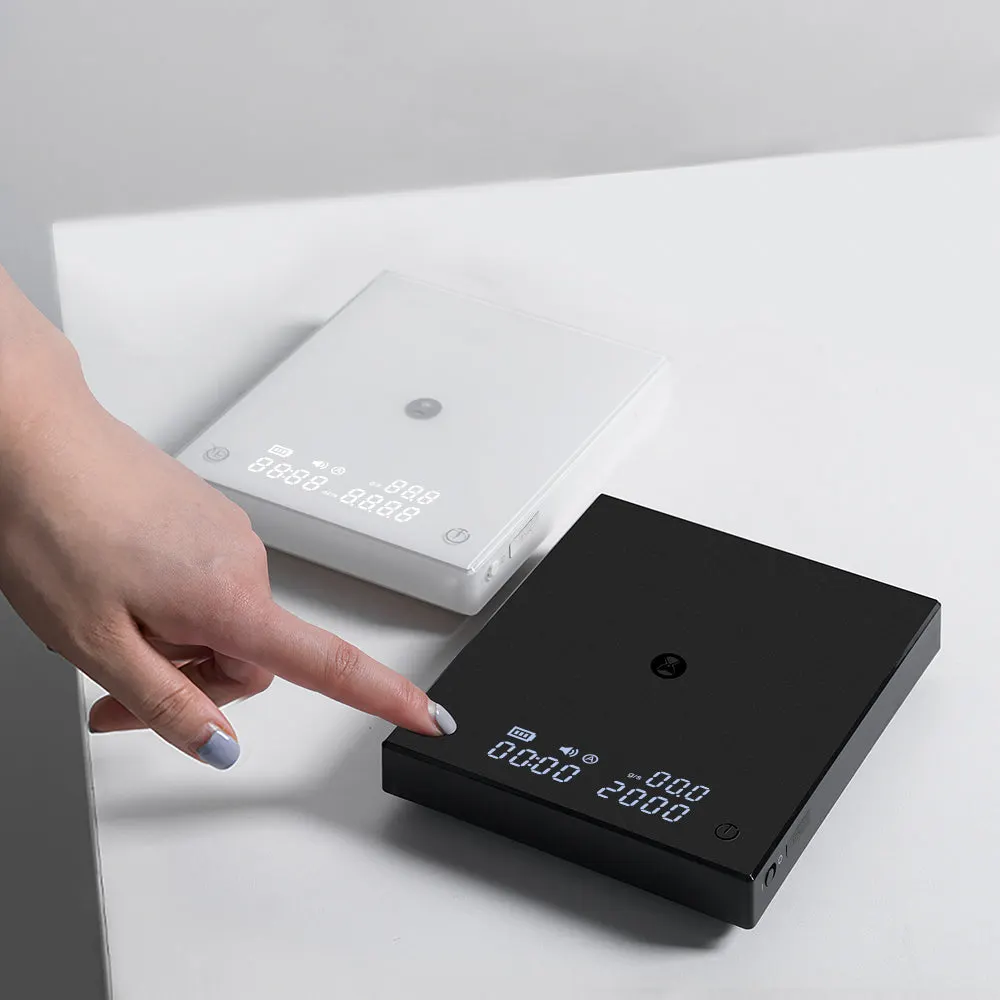
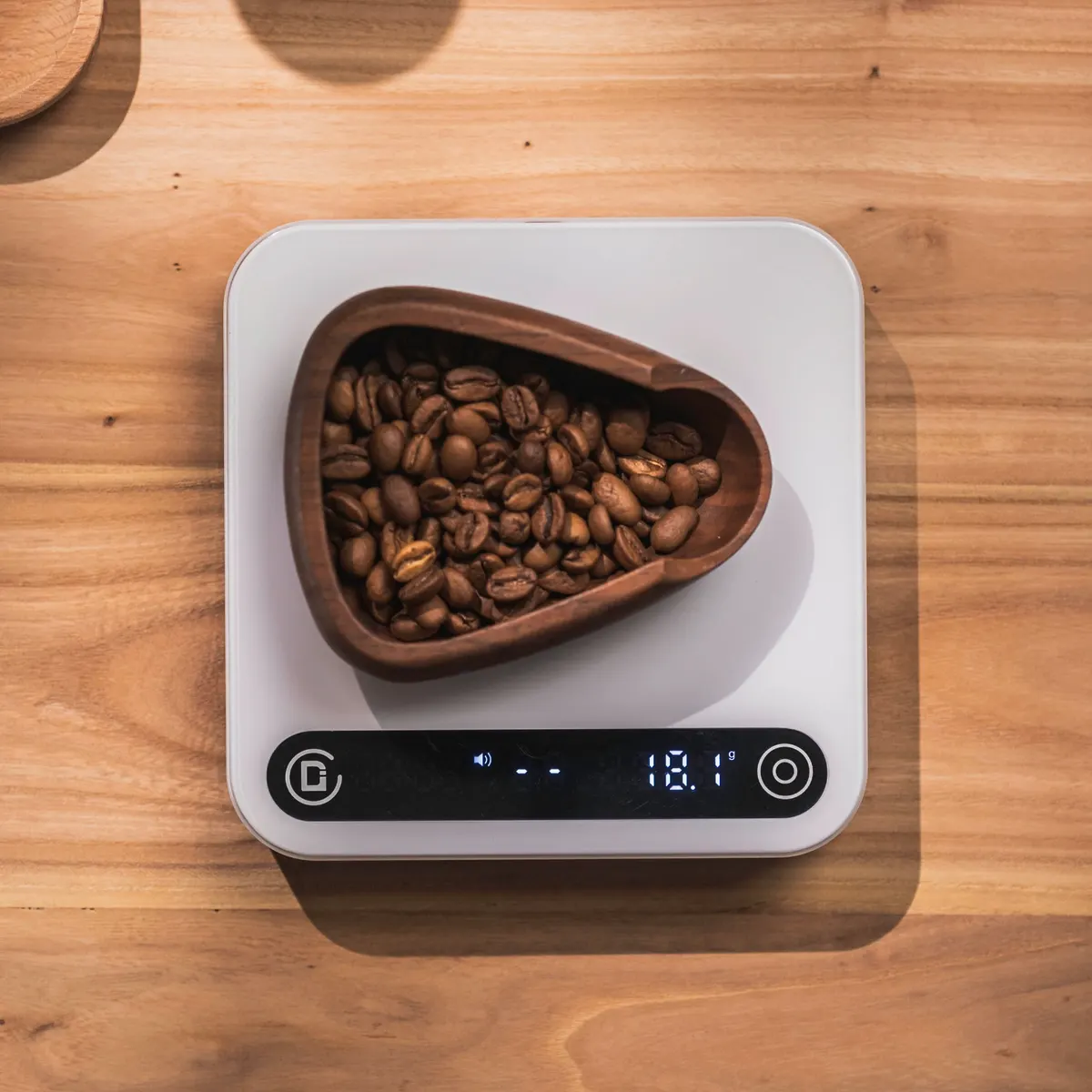
A brewing scale does more than weigh. Look for:
- A built-in timer
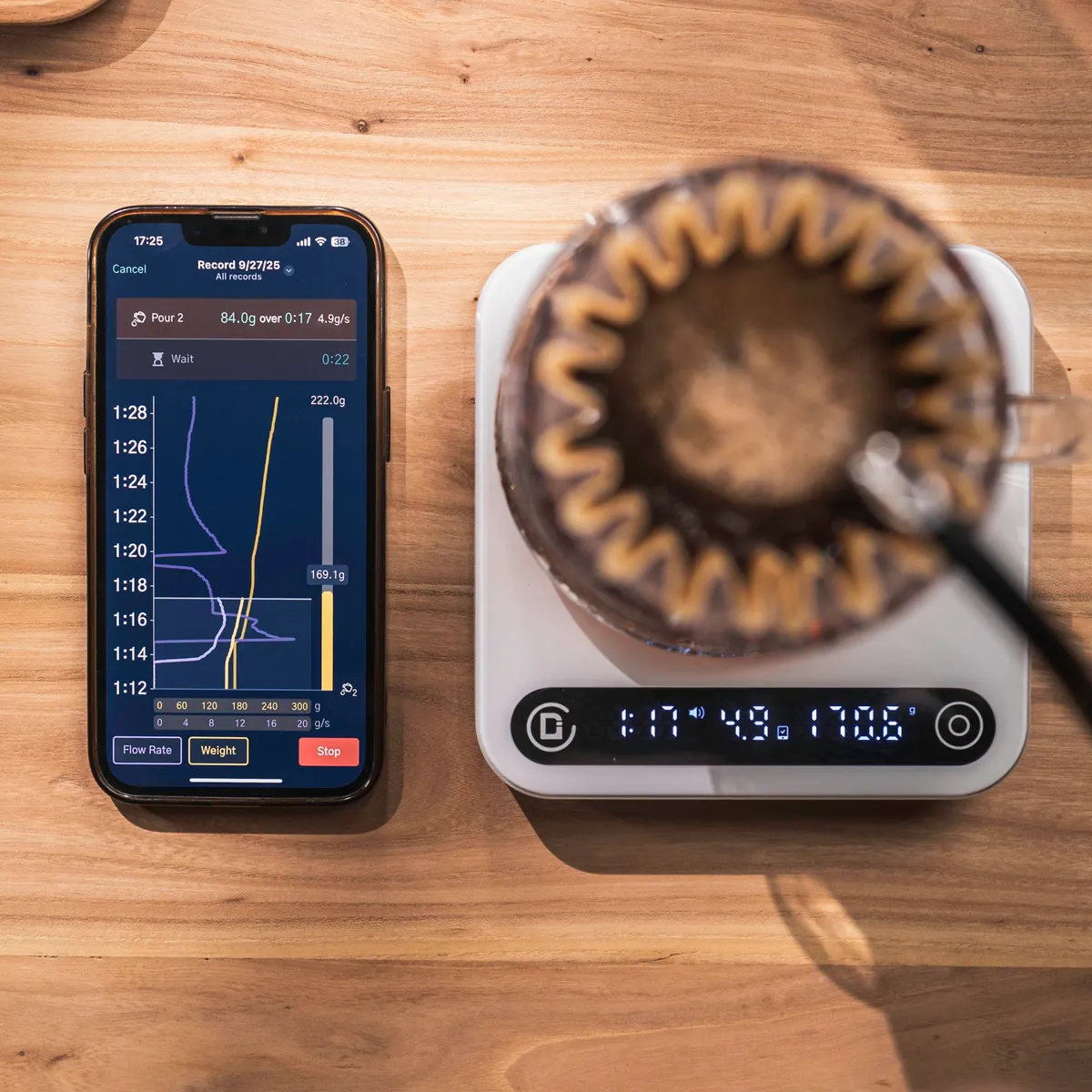
- A quick response, so it can follow a slow pour
- A flat, splash-resistant surface that is easy to wipe
- Flow rate display, which helps you pour at a steady pace
Timemore makes a range of these scales, and DiFluid makes the Microbalance.
Measuring the result
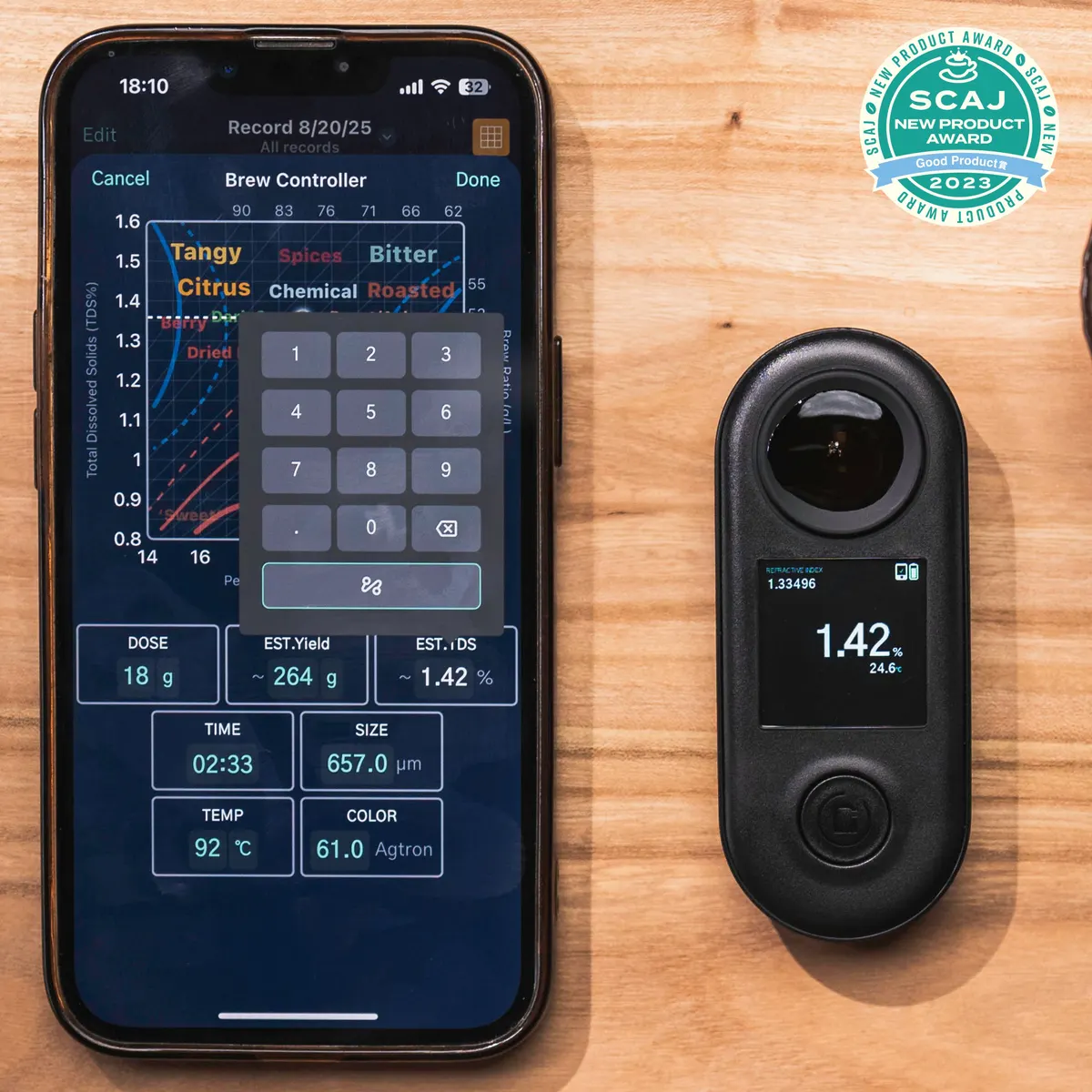
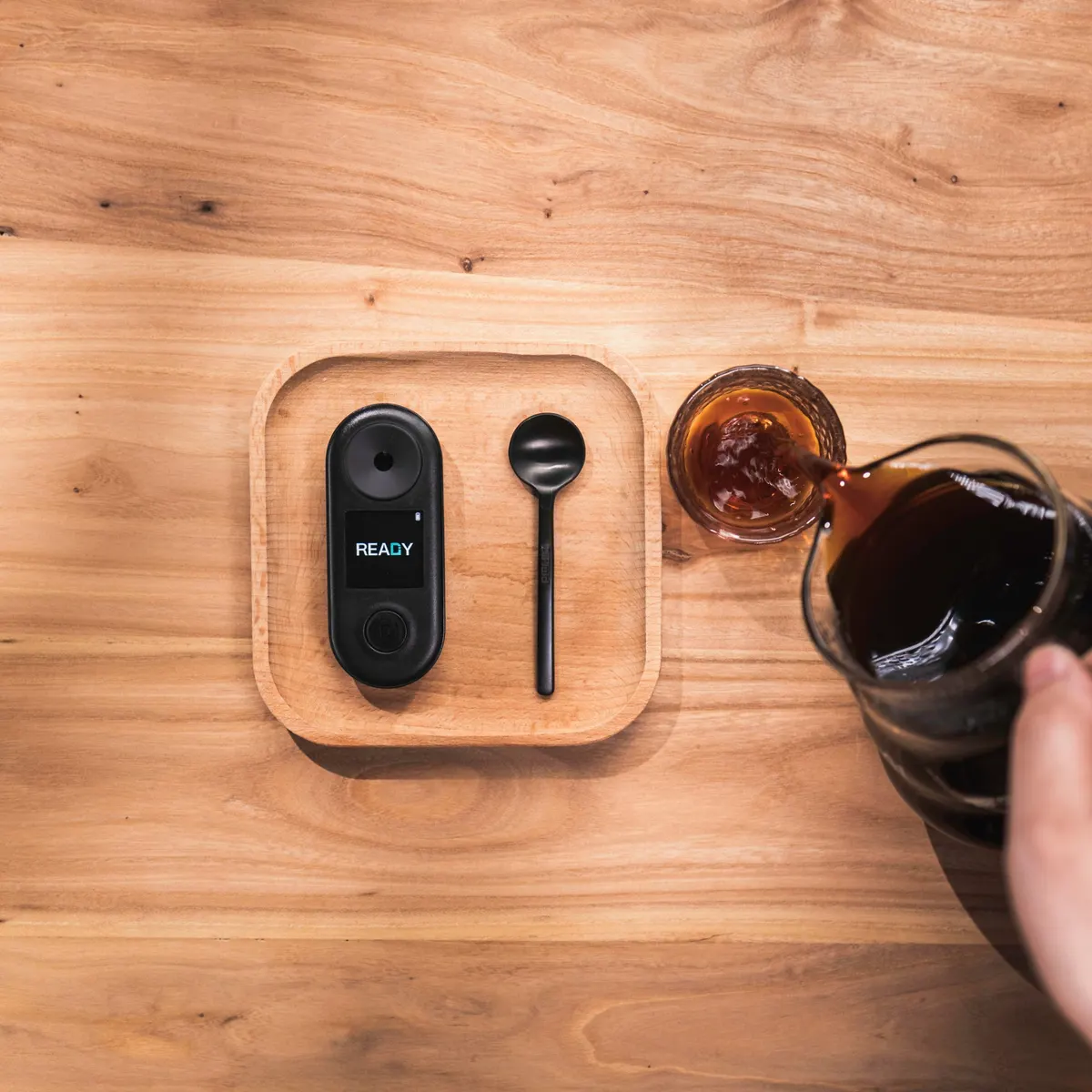
Once your recipe is repeatable, you can start to measure the result. A refractometer, such as the DiFluid R2, measures how much dissolved coffee is in your cup (the TDS), so you can compare brews with numbers as well as taste. It is optional, but it is a useful next step for anyone who wants to dial in more precisely.
Keep it simple
Weigh your beans, weigh your water, and write down what you did. Change one thing at a time and taste the difference.